Video
Restoring a 1960s Omega Speedmaster
18 July 2026 · 8 min read
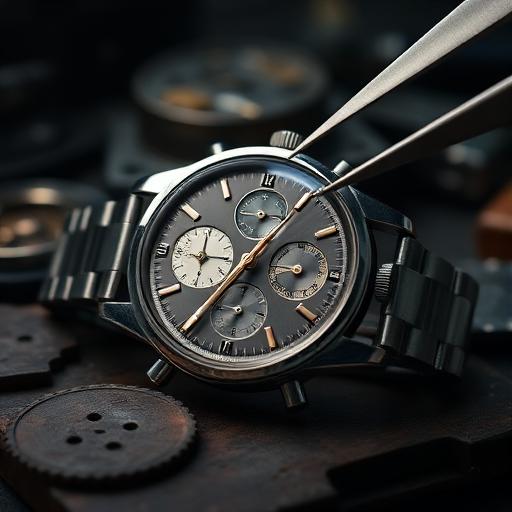
A 105.012 comes in with a seized chronograph and a case that has been polished twice too often. Six weeks later it leaves as itself again.
The watch arrives in a padded envelope: an Omega Speedmaster 105.012, calibre 321, chronograph seized, crystal crazed, lugs rounded from decades of enthusiastic polishing.
Step one is documentation. Every component is photographed before anything is touched, because restoration decisions are only defensible if they are reversible and recorded.
The calibre 321 is a column-wheel movement with a horizontal clutch, and it rewards patience. The seizure turns out to be dried oil in the chronograph runner rather than a broken part — the best possible outcome. Everything is stripped, cleaned in an ultrasonic bath, inspected under the microscope and reassembled with fresh lubricants matched to each contact point.
The case is the ethical question. Rounded lugs can be rebuilt with laser welding, but the result is no longer the original metal. The decision here is to leave the geometry alone and only remove corrosion — a slightly tired case that is honest beats a sharp case that is fiction.
The dial and hands stay untouched. The tritium has aged to a warm cream that no restorer can convincingly reproduce, and any intervention would cost more value than it returns.
Six weeks later the watch runs at +3 seconds a day with 285 degrees of amplitude, the chronograph resets cleanly, and the case still tells the story of sixty years on a wrist. That is what restoration should look like.